
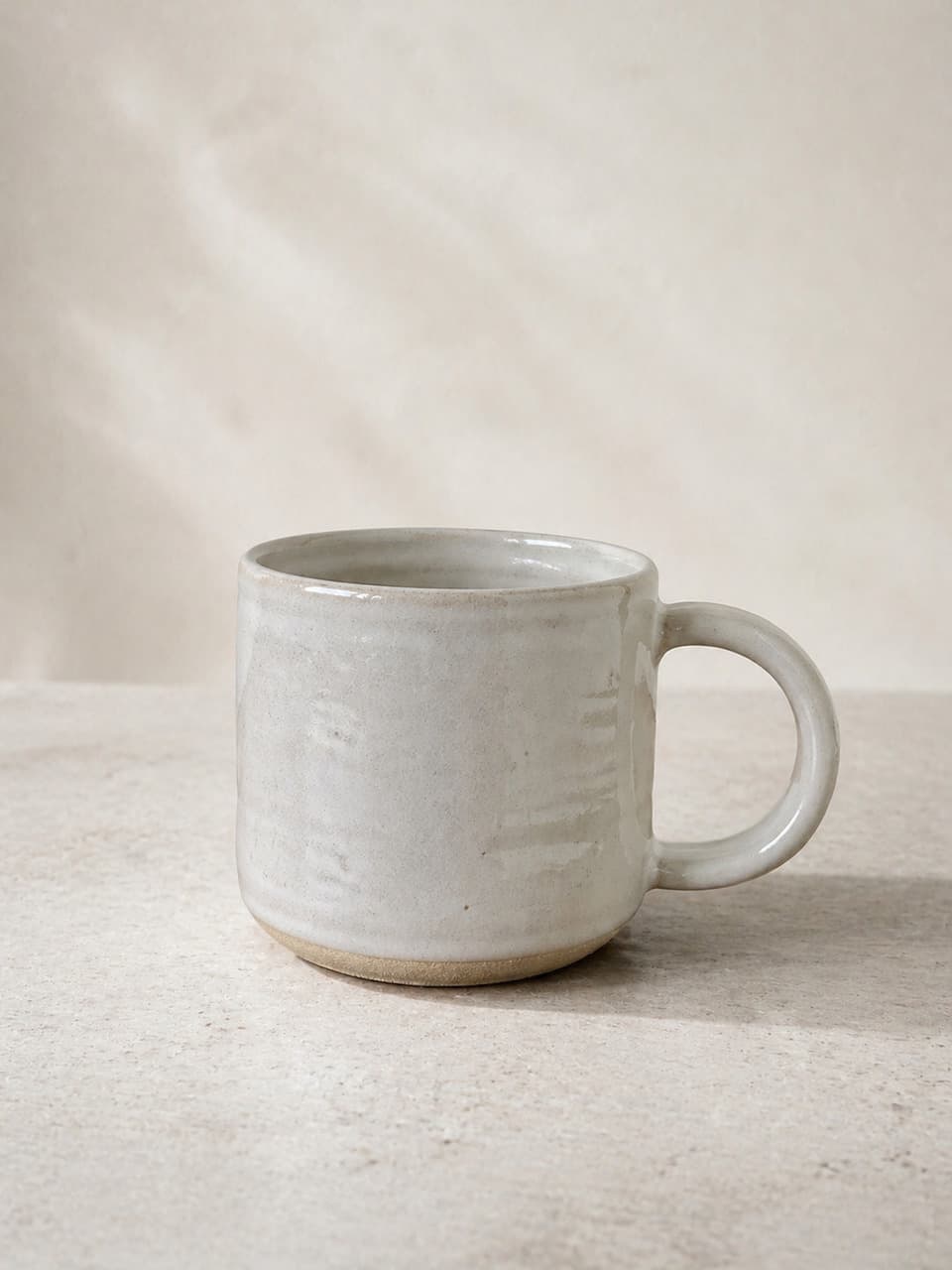
Pottery listing photo checklist for handmade ceramic sellers
Pottery shoppers do not buy a mood. They buy a form they will put on a shelf every day. If the photo sells a smoother glaze, a healed chip, or a taller pot than the one you fired, you will get messages instead of orders you want to keep.
Use this checklist before a pottery or ceramic listing goes live. It works whether you shoot the set yourself or build the first pass in the pottery photo workspace.
1. Source photo: start with the pot you ship
A sharp front hero is the required start:
- Full silhouette and proportions
- True glaze color and sheen
- Rim, handle, spout, or foot
- Throwing lines, speckle, or texture that are actually on the piece
Recommended extras, only when you already have them:
- Rim or interior
- Side profile
- Glaze or texture detail
- Base or maker mark
A slightly messy table is better than a crop that hides the handle. If the source already invents the pot, every generated scene will invent it again.
2. Cover image: inspection first
The first Etsy image has to survive a tiny grid thumbnail.
- Product is large in the frame
- Background is quiet
- Rim and glaze face the camera
- No props covering the form or maker mark
Compare any generated cover to the source before you assign it. The Etsy listing set guide explains why this slot is not the place for drama.
3. Lifestyle shelf: home use without a different pot
A wood shelf, linen table, or kitchen window helps people imagine daily use. It should not:
- Stretch the form or resize the handle
- Recolor cream glaze to a richer white
- Smooth throwing lines into factory ware
- Invent or heal chips, crazing, or kiln marks
One quiet surface usually beats a crowded tablescape.
4. Gift-ready frame: show the present, keep the SKU
Mugs, bowls, and small vases are frequent gifts. Kraft wrap, ribbon, or a quiet box is enough.
Check that the pot in the gift scene is still your pot. A prettier generic mug in a prettier box is advertising someone else’s product.
5. Texture and glaze: only what the camera saw
Close crops sell handmade work when they stay honest:
- Speckle, crawl, or satin from the source
- Throwing ridges you actually left
- Chips or kiln marks that exist
Do not publish a glaze recipe, interior, or maker mark the source photo does not show. The policy guide is simple here: do not invent a view the camera never saw.
6. Graphic facts you can ship
A graphic product post can carry:
- Capacity you measured
- Clay body or glaze name you actually used
- Height and width
- Gift occasion
- Care: food-safe claim you can stand behind, dishwasher or hand-wash, expect handmade variation
Do not let the overlay invent a volume or glaze you do not sell.
Printable review list
Before you publish:
- Silhouette, rim, and proportions match the source
- Handle, spout, or foot did not move
- Glaze color, sheen, and speckle did not jump
- Chips and kiln marks appear only if they exist
- Handmade texture was not factory-smoothed
- Gift and shelf scenes still show this SKU
- Graphic text matches the listing copy
- You would accept a return if this is what the buyer expected
If you want the first pass generated in one sitting, open CraftShot, upload the front hero, choose pottery, and build only the jobs you need. Pricing is there when you are ready to turn the checklist into files.
Same pot. Better photos. That is a listing shoppers can trust.